

For lash artists, choosing the right premade lash tray is not only about what looks attractive in the box. It is about how the lashes behave during pickup, how they look on different clients, how well they retain, and how efficiently they support salon work.
That is why one of the most common product questions today is:
What is the real difference between 3D, 4D, and 5D W lashes?
At a basic level, the answer seems simple. The number usually refers to how many fibres are included in the premade lash structure. But in professional lash work, the difference goes far beyond fibre count. It changes the final look, the density of the lash line, the weight balance on the natural lash, the level of drama, and the type of client each tray suits best.
In this guide, we will break down 3D vs 4D vs 5D W lashes in a practical way, so lash artists and lash buyers can choose the right density for styling, retention, and service efficiency.
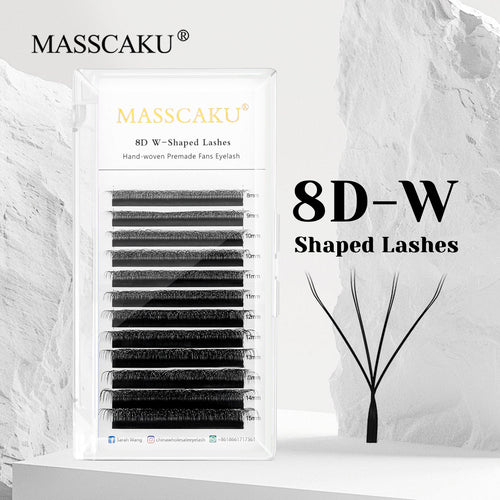
What Do 3D, 4D, and 5D Mean in W Lashes?
In W lashes, the number generally refers to the number of fibres joined together in the premade lash structure.
That means:
-
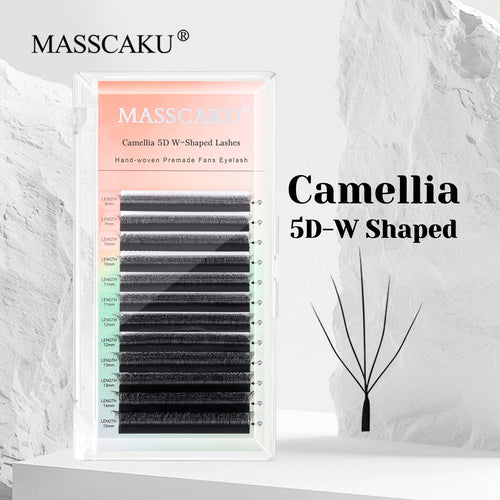
3D W lashes contain 3 fibres
-
4D W lashes contain 4 fibres
-
5D W lashes contain 5 fibres
As the number increases, the lash usually creates:
-
more fullness
-
more visible density
-
a darker lash line
-
stronger styling impact
However, the final result is also influenced by:
-
lash diameter
-
lash length
-
curl type
-
fan width
-
base design
-
application density
-
lash map
-
natural lash health
So while the number tells you the general volume level, it does not tell the full story by itself.
Why Lash Density Matters in Product Selection
Choosing the right density is important because it affects both the look and the wearability of the set.
A denser lash may create stronger visual impact, but if it is not suited to the client’s natural lashes, it can also create:
-
poor balance
-
lower retention
-
discomfort
-
an overly heavy finish
-
a style that does not match the client’s preference
A lighter lash may feel safer and softer, but it may not satisfy clients who want a fuller result.
That is why understanding 3D, 4D, and 5D W lashes helps lash artists make better decisions in:
-
service design
-
styling consultations
-
stock planning
-
client suitability
-
long-term retention
Visual Difference Between 3D, 4D, and 5D W Lashes
The easiest way to understand the difference is to think about the final lash line effect.
3D W lashes
-
soft fullness
-
lighter texture
-
more open finish
-
lower density
4D W lashes
-
balanced fullness
-
stronger structure
-
noticeable but wearable definition
-
medium density
5D W lashes
-
fuller coverage
-
darker lash line
-
stronger makeup effect
-
higher density
This matters because clients rarely ask in technical language. They usually say things like:
-
“I want something natural but fuller.”
-
“I want soft but noticeable.”
-
“I want a fluffy set.”
-
“I want a darker, more defined lash line.”
The lash artist’s job is to translate those preferences into the correct W lash density.
Which One Is Better for Retention?
Retention is influenced by many factors, but W lash density does play a role.
3D W lashes may support better retention when:
-
the client has fine natural lashes
-
a lighter set suits the eye better
-
the client prefers a softer look
-
weight needs to be kept lower
4D W lashes may support the most reliable balance when:
-
the client has average to healthy natural lashes
-
visible fullness is needed without overload
-
the lash artist wants versatility
-
the set needs to balance density and comfort
5D W lashes may retain well when:
-
the client has strong natural lashes
-
the fibre diameter is fine enough
-
the lash lengths are controlled
-
the mapping is balanced
-
the artist avoids overloading
So in practical salon work, 4D W lashes are often the most universally reliable, while 3D is the softer option and 5D is the bolder option.
Final Thoughts on 3D vs 4D vs 5D W Lashes
The difference between 3D, 4D, and 5D W lashes is not just the number of fibres. It is the difference in softness, density, styling impact, and client suitability.
-
3D W lashes are best for softer fullness and lighter enhancement
-
4D W lashes are best for balanced volume and all-round versatility
-
5D W lashes are best for stronger density and more visible transformation
The best choice is not the one with the biggest number. It is the one that matches the client’s natural lashes, desired style, and maintenance expectations.
For lash artists and lash buyers building a better lash menu in 2026, understanding these density differences is essential. It helps improve consultations, product selection, retention, and overall service quality.